

If you are planning a major home renovation next year, the best time to organize your ideas is now. Begin by evaluating which areas of your home truly need improvement, whether that is a dated kitchen, an underutilized basement, or a bathroom that no longer feels functional. Carefully assess your renovation budget and consider how much flexibility you can allow for unexpected expenses. It is equally important to think about long term value, not just visual upgrades. In 2026, homeowners are focusing on renovations that improve lifestyle quality, energy efficiency, and property resale potential. A successful renovation plan balances trend awareness with timeless design decisions that will still look relevant years from now.
The home improvement landscape has shifted significantly in recent years. Rising energy costs, remote work culture, climate concerns, and multigenerational living are influencing renovation priorities. Instead of chasing short lived fads, homeowners are investing in smart upgrades that improve daily functionality while enhancing comfort and sustainability. Based on contractor insights, renovation industry reports, and evolving buyer behavior patterns, the following 2026 home renovation trends highlight where the market is moving and how you can stay ahead.
Truly Custom Home Style: Designing Around Lifestyle
Personalization Over Cookie Cutter Layouts
One of the most dominant renovation trends in 2026 is deep personalization. Homeowners are no longer designing spaces to look like catalog images or social media trends. Instead, they are shaping their homes around their routines, habits, and long term needs. This might include creating a dedicated workspace with built in shelving, designing a kitchen optimized for entertaining, or incorporating storage solutions tailored to a growing family. Personalization ensures that the home supports everyday life rather than forcing homeowners to adapt to rigid layouts. This shift reflects a broader understanding that comfort and functionality are more important than aesthetic conformity.
Designing around lifestyle also adds long term value to the property. When renovations solve practical problems such as insufficient storage, poor lighting, or inefficient layouts, they increase usability for future buyers as well. A thoughtfully customized home often stands out in competitive real estate markets because it demonstrates intentional planning. In 2026, the emphasis is on blending individual expression with smart spatial design so that homes feel unique yet practical.
Playful and Expressive Interior Design
Bold Colors, Texture and Character
The minimalist, sterile look that dominated past years is evolving into warmer, more expressive interiors. In 2026, homeowners are embracing bold color schemes, layered textures, statement lighting, and creative shapes that bring energy into the space. Instead of neutral only palettes, people are experimenting with deep greens, warm terracottas, rich blues, and textured wall finishes. This approach adds visual depth and makes homes feel inviting rather than overly structured. Playful design does not necessarily mean clutter; it means thoughtful personality.
Homeowners are also incorporating vintage pieces, handcrafted décor, and mixed materials to create visual interest. Unique finishes in kitchens, patterned tiles in bathrooms, and artistic lighting fixtures are replacing predictable layouts. This trend allows people to showcase individuality while still maintaining design cohesion. When executed carefully, expressive design enhances emotional connection to the home without compromising functionality.
Sustainable and Energy Efficient Renovations
Eco Conscious Upgrades That Reduce Costs
Sustainability remains a central focus in 2026 home improvement planning. Rising utility bills and environmental awareness have encouraged homeowners to invest in energy efficient systems and eco friendly materials. Induction cooktops, heat pumps, smart thermostats, enhanced insulation, and low flow plumbing fixtures are becoming standard upgrades rather than luxury additions. These improvements not only reduce carbon footprint but also lower monthly operating expenses over time. The financial benefits often justify the upfront investment.
Builders and designers are also prioritizing recycled materials, responsibly sourced wood, and water conserving fixtures. Solar panel installations and battery backup systems are increasingly common in new renovations, especially in regions experiencing extreme weather events. Climate resilience is now part of renovation planning, with homeowners adding storm resistant windows and improved drainage systems. These decisions reflect a shift toward long term thinking, where homes are built to withstand environmental challenges while maintaining efficiency.
Aesthetic Accessibility and Aging in Place
Universal Design for Every Generation
Another major 2026 renovation trend is accessibility focused design that does not compromise aesthetics. As multigenerational living increases and homeowners choose to age in place, renovation plans now include adaptable features that enhance safety and convenience. Wider doorways, lever style handles, adjustable cabinetry, and slip resistant flooring are becoming standard elements. These changes are subtle but significantly improve daily comfort and mobility for residents of all ages.
Manufacturers are also developing smarter appliances with multilingual interfaces, voice controls, and tactile options for visually impaired users. Touchless faucets with temperature controls reduce burn risks, while adjustable shelving allows easy access at different heights. Universal design is no longer perceived as institutional or clinical. Instead, it is integrated seamlessly into modern interiors, making homes both elegant and inclusive.
Biophilic Design and Natural Inspiration
Bringing the Outdoors Inside
Biophilic design continues to gain momentum in 2026 as homeowners seek stronger connections with nature. Large windows, glass sliding doors, indoor plants, and natural materials such as wood and stone create a sense of openness and tranquility. Earth inspired color palettes, particularly greens and warm neutrals, are dominating interior renovations. These choices enhance mental well being and create a calming environment within busy urban settings.
Natural textures such as bamboo flooring, cork accents, and exposed wood beams are replacing synthetic materials in many renovation projects. Integrating outdoor living areas with interior spaces also increases usable square footage and improves property appeal. Whether through skylights, indoor gardens, or organic material choices, biophilic design supports wellness while maintaining contemporary elegance.
Spa Inspired Bathrooms for Everyday Wellness
Transforming Functional Spaces into Retreats
Bathrooms are no longer viewed as purely practical spaces. In 2026, they are being transformed into private wellness retreats designed to promote relaxation and stress relief. Homeowners are installing deep soaking tubs, rainfall showers, heated flooring, towel warmers, and layered lighting systems. These features enhance daily routines and create a spa like atmosphere within the home.
Beyond fixtures, design elements such as natural stone finishes, calming color schemes, and ambient lighting contribute to a serene environment. Aromatherapy systems and smart temperature controls further personalize the experience. Investing in bathroom upgrades not only improves lifestyle quality but also delivers strong resale value, as modern buyers increasingly prioritize comfort oriented amenities.
Multi Functional Spaces for Flexible Living
Adapting to Work, Family and Lifestyle Changes
Flexible living spaces are one of the most practical renovation trends of 2026. As remote work and hybrid lifestyles continue, homeowners need rooms that serve multiple purposes without feeling cramped. Office and guest room combinations, gym and media room integrations, and expandable kitchen islands are becoming common design solutions. Smart storage systems and modular furniture help maximize available square footage efficiently.
Instead of dedicating rooms to single functions, homeowners are designing adaptable layouts that evolve over time. Built in shelving, fold away desks, and sliding partitions allow spaces to transform based on immediate needs. This approach ensures that homes remain functional despite changing routines, family growth, or professional demands.
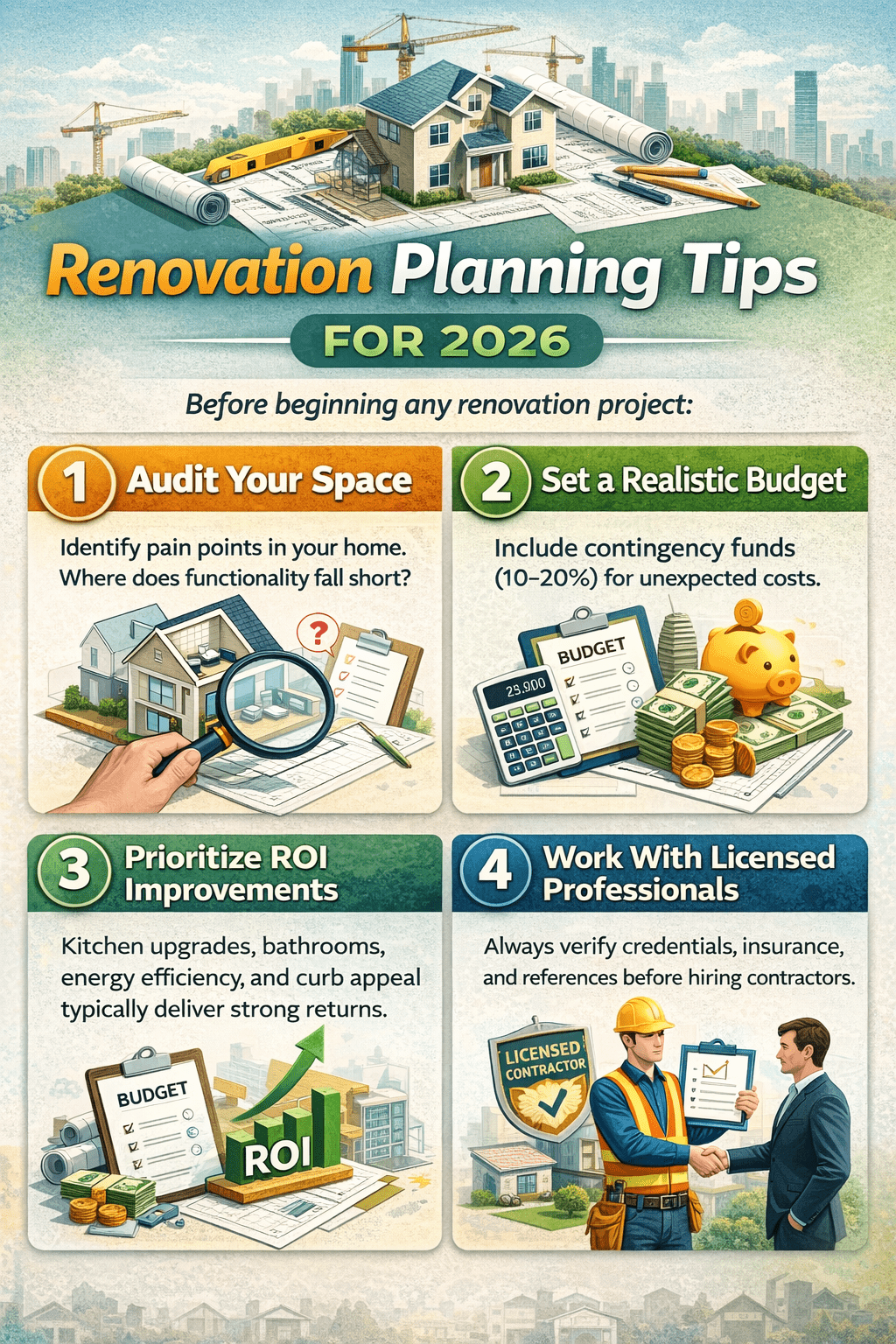 Renovation Planning Tips for 2026
Before beginning any renovation project:
Step 1: Audit Your Space
Identify pain points in your home. Where does functionality fall short?
Step 2: Set a Realistic Budget
Include contingency funds (10–20%) for unexpected costs.
Step 3: Prioritize ROI Improvements
Kitchen upgrades, bathrooms, energy efficiency, and curb appeal typically deliver strong returns.
Step 4: Work With Licensed Professionals
Always verify credentials, insurance, and references before hiring contractors.
The Future of Home Improvement
The defining theme of 2026 home renovation trends is balance between aesthetics and performance. Homeowners are seeking spaces that reflect personality while supporting efficiency, sustainability, and adaptability. Smart technology, eco conscious materials, inclusive design, and wellness focused features are reshaping the meaning of home. Instead of temporary design trends, the focus is now on long term value and resilience. Renovations are becoming strategic investments that improve daily living while protecting property value for the future.