

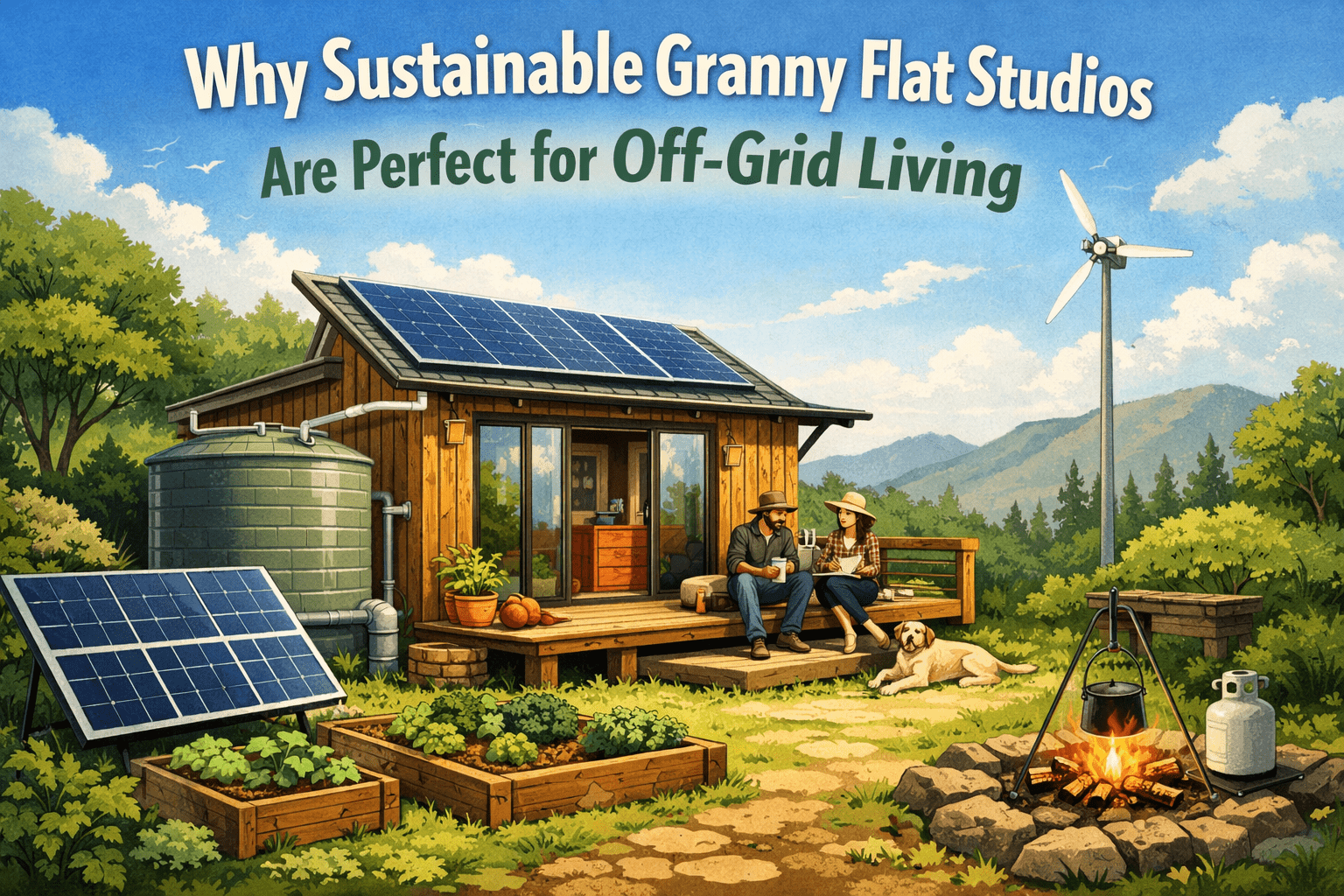
“The future of housing is not about size, but sustainability,” said architect Edward Mazria. This idea is key to modern living spaces. In Australia, the granny flat studio is a game-changer for eco-friendly, small living.
The tiny home movement has changed residential design a lot. Granny flat studios are at the forefront. They offer a new way to live sustainably, with a focus on being small and green.
In Australia, people are seeing the value of these small homes. A granny flat studio is more than just extra space. It’s a sign of caring for the planet and smart design. These homes can fit in any backyard, city, or country, changing how we see homes.
Key Takeaways
- Granny flat studios offer a sustainable alternative to traditional housing
- Compact design reduces environmental impact and living costs
- Flexible living solution for various property types
- Perfect for off-grid living and self-sufficient lifestyles
- Innovative approach to modern Australian housing challenges
Understanding the Rise of Sustainable Granny Flat Studios
The Australian housing scene has changed a lot with the rise of sustainable granny flat studios. These small homes offer new ways to live, combining flexibility with eco-friendliness. They’re perfect for modern homeowners looking for smart, green living options.
Australians are now seeing accessory dwelling units as a smart housing solution. What was once just an in-law suite has grown into a full, independent living space. It meets many housing needs in a small, efficient way.
The Evolution of Modern Tiny Home Living
Tiny home living has changed a lot in recent years. It started as a simple lifestyle choice but has grown into a big architectural and sustainable movement. Key changes include:
- Reduced environmental footprint
- Cost-effective housing solutions
- Increased design flexibility
- Enhanced personal independence
“Small spaces can create big opportunities for sustainable living” – Australian Sustainable Design Institute
Key Features of Eco-Friendly Backyard Cottages
Modern backyard cottages focus on being eco-friendly. They use the latest tech and design to be efficient and green. This makes them great for the environment and for living.
- Advanced thermal insulation
- Solar energy integration
- Water-efficient fixtures
- Sustainable building materials
Australian Regulations and Building Standards
Building an accessory dwelling unit needs careful attention to local laws. Each Australian state has its own rules for granny flat studios. These rules ensure safety, sustainability, and fit with the community.
Before starting your backyard cottage, you must check local council rules. You’ll need the right permits. Knowing these rules is key to a legal and cozy home.
Essential Off-Grid Systems for Your Secondary Suite
Building a self-sufficient laneway house needs careful planning. It’s about using innovative solutions that are good for the planet. The right setup can make your secondary suite truly independent.
Solar Power and Battery Storage Solutions
Modern secondary suites can be fully powered by solar energy. Homeowners have many ways to generate and store clean energy:
- Roof-mounted solar panel systems
- Compact battery storage units
- Inverter technology for efficient power conversion
- Smart monitoring systems to track energy consumption
Water Collection and Treatment Methods
Managing water is key for off-grid homes. In Australia, we need strong water collection plans for a steady supply:
- Rainwater harvesting from roof surfaces
- Greywater recycling systems
- Advanced filtration technologies
- Underground water storage tanks
Waste Management and Composting Systems
Good waste management is vital for eco-friendly homes. New composting and waste cutting methods help a lot:
- Compact composting toilets
- Worm farming for organic waste
- Modular recycling stations
- Zero-waste kitchen design principles
By using these off-grid systems, homeowners can live sustainably. They can greatly reduce their need for outside help.
Designing the Perfect Granny Flat Studio for Self-Sufficiency
Building a guest house needs careful planning and creative design. Granny flats require smart space solutions for efficient and cozy living in small areas.
When designing a self-sufficient studio, keep these key points in mind:
- Integrate multi-functional furniture that serves multiple purposes
- Prioritise vertical storage solutions
- Implement passive solar design techniques
- Create flexible living spaces
Optimising space is key in small homes. Modular furniture can change rooms fast – a dining table can turn into a workspace, and a sofa into a bed. Built-in storage keeps things tidy, making the space feel bigger.
Passive solar design is vital for self-sufficiency. Smart window placement and direction can cut energy use a lot. Living areas that catch natural light and warmth in winter and shade in summer keep you comfortable without needing much heating or cooling.
Smart design turns small square metres into useful living areas.
Outdoor spaces add to the design of guest houses. A small garden can help grow food, and well-planned landscaping can control temperature and look good.
By using smart design, homeowners can make guest houses that are more than just homes. They become sustainable, efficient places for off-grid living.
Smart Space Planning and Sustainable Materials
Micro living needs smart design and green choices. Granny flat studios show a new way to live small, using every inch wisely. The secret to good micro living is planning space well and picking eco-friendly materials.
Eco-Friendly Building Materials
Choosing the right materials can cut down on harm to the environment. Australian designers are going for green options that work well here:
- Recycled timber for building parts
- Locally sourced natural stone
- Bamboo for floors and walls
- Reused metal parts
Maximising Natural Light and Ventilation
Smart design can make small spaces feel big. By placing windows and skylights right, and using open layouts, we can make rooms look bigger and use less energy.
- Put windows for air to flow through
- Use mirrors to bounce light around
- Install adjustable shades
Energy-Efficient Appliances and Fixtures
Living small doesn’t mean giving up on useful things. Choosing energy-saving appliances is key in tight spaces. Small, multi-use items help save power and space.
- Induction cooktops
- Heat pump water heaters
- Smart power strips
- LED lights
Conclusion
Off-grid living through granny flat studios is more than just a place to live. These tiny homes change how we think about homes in Australia. They use new tech and green ideas to help us live better and smaller.
Granny flat studios are changing how we see homes in Australia. They show that living small can be good for the planet. With solar power and water saving, they make a big difference.
The future of homes in Australia looks bright with granny flat studios. As cities get busier and we care more about the planet, these homes are a smart choice. They’re not just a trend, but a big step towards living better.
For those looking for a new way to live, granny flat studios are a great option. They mix cool design, care for the planet, and practical use. These homes are key to a greener future.
1. What is a sustainable granny flat studio?
A sustainable granny flat studio is a compact, self-contained living space designed with eco-friendly materials and energy-efficient systems. These studios often include solar power, rainwater harvesting, and insulation that reduces energy consumption, making them ideal for off-grid living.
2. How does off-grid living work in a granny flat studio?
Off-grid living means the granny flat operates independently from municipal utilities. Sustainable granny flat studios use solar panels for electricity, battery storage for backup power, water tanks for supply, and composting or low-water systems for waste management.
3. Are sustainable granny flat studios energy efficient?
Yes, they are highly energy efficient. Features like passive solar design, energy-efficient appliances, LED lighting, and proper insulation significantly reduce power usage, allowing the studio to function comfortably on renewable energy sources.
4. Can a granny flat studio run completely on solar power?
In most cases, yes. With properly sized solar panels and battery storage, a sustainable granny flat studio can meet daily energy needs, including lighting, heating, cooling, and appliances, even in off-grid locations.
5. Is off-grid living in a granny flat studio affordable?
Off-grid granny flat studios can be cost-effective in the long run. While initial setup costs may be higher, savings on electricity, water bills, and reduced maintenance often make them more affordable over time.
6. What materials are used in sustainable granny flat studios?
These studios commonly use recycled steel, sustainably sourced timber, low-VOC paints, and eco-friendly insulation. Such materials reduce environmental impact while improving indoor air quality and durability.
7. Are sustainable granny flat studios suitable for year-round living?
Yes, when designed correctly. High-quality insulation, climate-responsive design, and efficient heating and cooling systems ensure comfort throughout the year, regardless of weather conditions.
8. Do sustainable granny flat studios require council approval?
Approval requirements vary by location. While many regions allow granny flats, off-grid systems may require additional permits. It’s important to check local zoning laws and building regulations before construction.
9. How much maintenance does an off-grid granny flat studio need?
Maintenance is generally minimal. Solar panels, batteries, and water systems require periodic checks, but modern systems are designed for longevity and low upkeep.
10. Who are sustainable granny flat studios best suited for?
They are ideal for retirees, remote workers, eco-conscious homeowners, guests, or anyone seeking a minimalist, low-impact lifestyle away from traditional utility dependencies.