

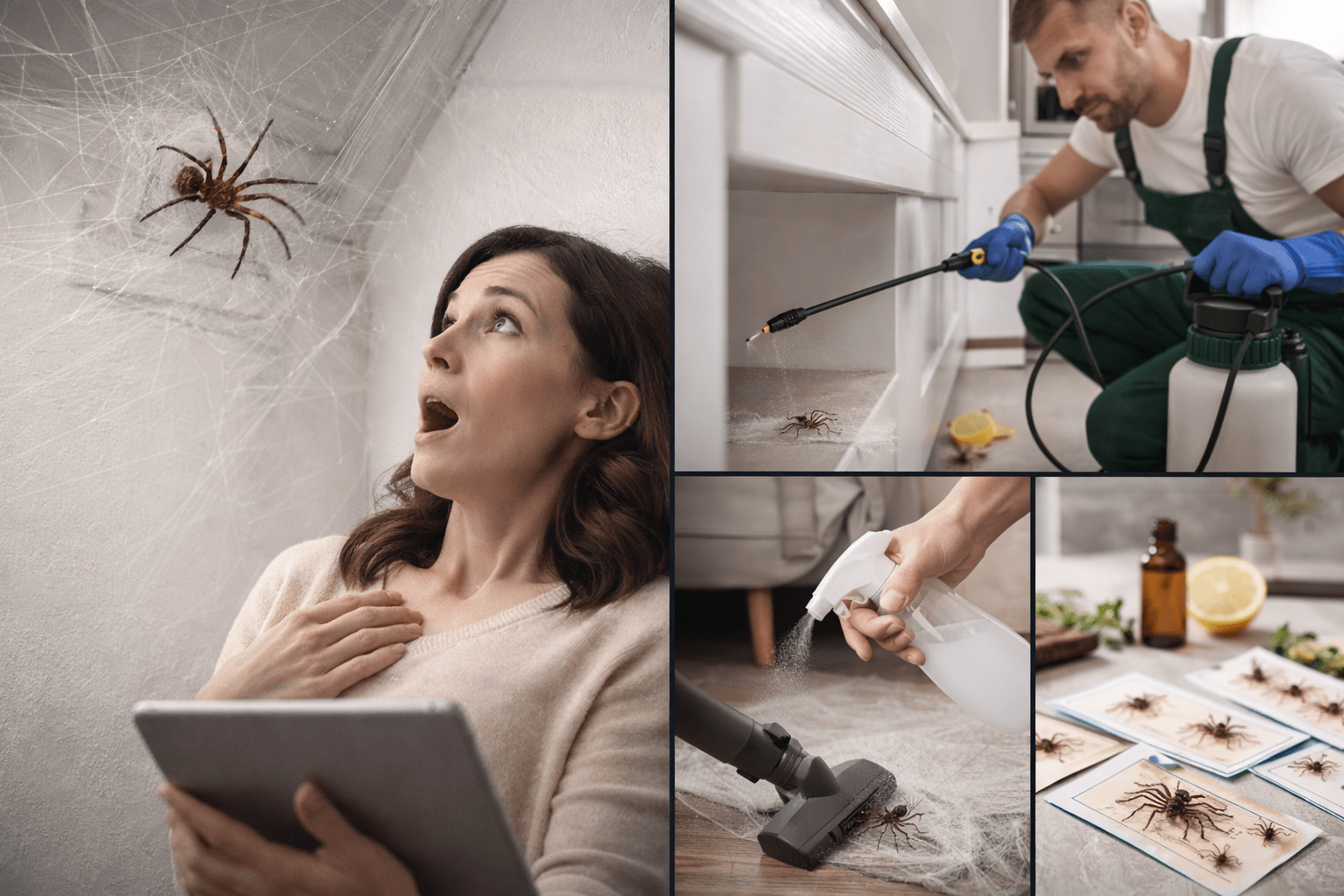
Spiders, though crucial in controlling harmful insects, can often bring an uncomfortable aura to our homes with their eight-legged presence. Their invaluable ecological role does little to temper the unease they incite when encountered indoors.
If you’re finding yourself in shared quarters with these arachnids and are keen on learning strategies to control their presence, you’ve come to the right place. This comprehensive guide by pest control providers will shed light on different types of house spiders, explain practical ways to manage them, and even indicate when it’s time to call in pest control services. With this knowledge at your disposal, you’ll be better equipped to create a more secure and spider-free living space.
Most common types of house spiders
Several types of spiders may find refuge in British homes. Frequent visitors include the Giant House Spider, known for its impressive size, the Lace Webbed Spider with its intricate web patterns, the agile Zebra Jumping Spider, and the notorious False Widow, often mistaken for its more dangerous cousin.
While each species has distinct characteristics, they share a mutual penchant for cosy, dimly lit, and secluded corners of our homes.
How to get rid of spiders
To successfully banish spiders from your home, you’ll need a strategy that targets the issue from multiple angles. The aim is to not only make your home less enticing to these creatures but also establish effective traps or repellents to deter the ones that still dare to trespass.
Invest in spider traps and catchers
Spider traps and catchers offer a non-toxic, user-friendly solution for controlling spider populations within your home. Traps often use adhesive materials to capture unsuspecting spiders, rendering them immobile.
Spider catchers, on the other hand, are handy devices that enable you to physically catch spiders, maintaining a comfortable distance, and then release them outdoors. Position these trapping tools strategically in areas where spider activity is frequent, like behind furniture pieces or in dark corners, for optimal effectiveness. Not everybody has the guts for this kind of spider hunting though, so it’s understandable if you want to leave it to a pest exterminator.
Remove spider webs promptly
Swiftly removing spider webs plays a pivotal role in controlling the spider population in your home. These webs are not only a food-catching tool for spiders, making your space attractive for their stay, they also serve as nests for their egg sacs.
Eliminating these structures, therefore, cuts off their food source and disrupts their reproductive cycle, preventing the next generation of spiders from populating your home. This dual-action strategy makes your home a less attractive habitation for them, effectively discouraging their residency.
Use peppermint oil, vinegar and cinnamon
Natural substances such as peppermint oil, vinegar, and cinnamon are not just culinary favourites; they double up as potent spider deterrents. The robust aromas these ingredients emit are highly disliked by spiders, driving them away easily.
You can create a simple, homemade spider repellent by mixing these substances with water and spritzing the mixture around your house, particularly in areas you’ve noticed spider activity. Using such natural deterrents is not only effective but also adds a pleasant scent to your home. Be mindful of the surfaces you spray upon, as some materials might get stained or react with the acidity of the vinegar.
Install protective screens
As they say, “An ounce of prevention is worth a pound of cure”. Installing well-fitted protective screens on your windows and doors is an excellent preventive measure to stop spiders from intruding into your living space. Be sure to regularly check these screens for any tears or holes that spiders can exploit. This simple, physical barrier can substantially reduce the influx of spiders, keeping your home more spider-free than ever.
Consider commercial insecticides
In cases of significant spider infestations, the usage of commercial insecticides might be the necessary course of action. These pesticides can efficiently target spider entry points such as windowsills, entrances, and vents. However, resort to this option only if absolutely required due to their potential of causing harm to people, pets, and the overall surrounding environment.
If you don’t feel like you’re up to the challenge, then using pest control services is the way to go. Better safe than sorry.
Keep your house clean and clutter-free
Regular cleaning routines and extra attention to the room corners and furniture behind can significantly reduce the likelihood of spider infestations. As any pest exterminator would say, by eliminating potential food sources (other small insects) and minimising clutter that provides excellent hiding and web-spinning spots, you make your home less hospitable for spiders. Pay special attention to typically cluttered spaces like basements, garages, and attics. A clean and tidy home is not just pleasing to the eye but also less inviting to our eight-legged visitors.
Light citrus candles
Citrus scents, apart from adding a refreshing, vibrant ambience to your living space, are also a potent deterrent against spiders. The sharp, tangy aroma is inherently disagreeable to the olfactory senses of spiders, repelling them effectively. By lighting citrus candles or employing citrus-scented air fresheners, you can create an environment that is not just less inviting to these eight-legged creatures but also exceedingly pleasant for human occupants.
The sensory combination of bright, invigorating citrus notes will not only help to keep your home spider-free but also fill it with an enchanting fragrance that can boost mood and create a positive atmosphere. As a pro tip, you might consider using natural citrus scents derived from the essential oils of lemon, orange, grapefruit, or lime for best results.
When to call pest control experts
Despite all the preventive and reactive measures you may employ, there are instances when a spider infestation grows beyond one’s control or when you find yourself sharing your living space with venomous species that could present a potential health risk. Under such circumstances, the right decision is to bring in a company that offers professional pest control services.
These professionals arrive with an array of instruments and understanding of spider removal. Their extensive training allows them to identify the species involved accurately, understand its behaviours and hiding spots, and deploy the most effective control strategies. Utilising a variety of tools, from specialised vacuum equipment that can safely remove spiders and their webs, to targeted insecticides that can eradicate even the most stubborn infestations, pest exterminators can restore the balance in your home.
They also employ strategies to limit risks to you, your loved ones, pets, your property, and the environment. They guarantee that non-target creatures are not adversely harmed, hence preserving biodiversity. In addition, their after-care guidance aids in the long-term maintenance of a spider-free environment. As a result, if you find yourself with a significant spider infestation, don’t hesitate to contact these spider pest control professionals. Their assistance can bring peace of mind as well as a safer and more comfortable living environment.
Conclusion
Living with spiders is not ideal for most people. However, maintaining a spider-free home is possible with the right preventative measures, prompt action, and occasional professional help. Although managing these eight-legged occupants is an ongoing task, it becomes more manageable with the strategies mentioned in this guide. With persistence and consistency, a spider-free home can be your reality. Just remember, from cleanliness to timely web removal, natural repellents or expert help when needed, you have an array of tools at your disposal. A spider-free home is an achievable goal.