

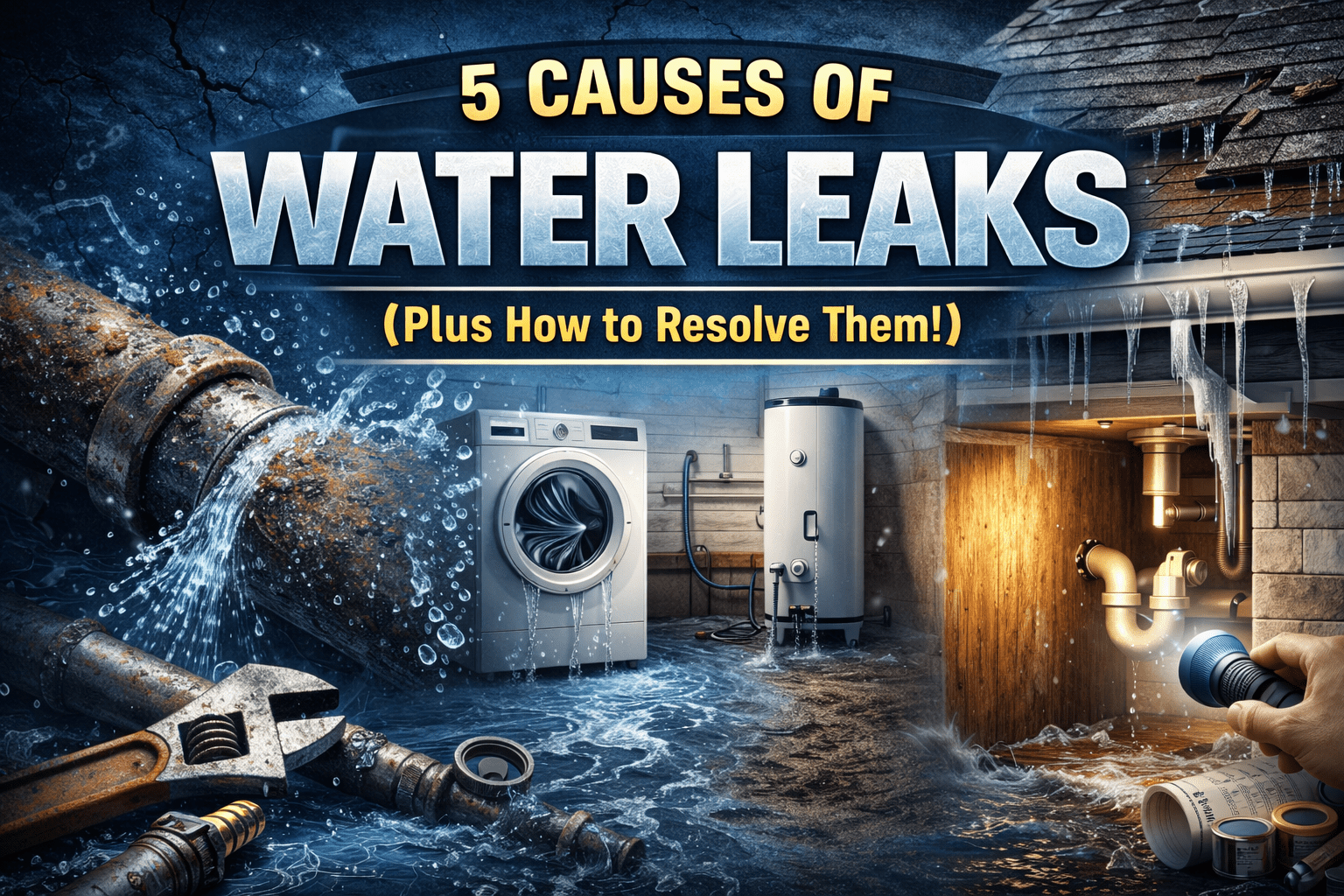
Leaks can seriously damage residential and commercial buildings, leading to issues like compromised insulation, weakened foundations, and mold growth. Nearly 30 percent of homeowners insurance losses are due to water damage. The potential costs of not addressing leaks can be significant, making it crucial to recognize and resolve leaks to protect your investment.
Here are five common leak sources and detailed, actionable measures to help mitigate the issue.
Plumbing Failures
Plumbing leaks are some of the most frequent culprits of water damage. These occur due to bursts, corrosion, loose connections, and faulty seals. Leaks are especially prevalent in plumbing made from materials like galvanized steel or polybutylene, which have a short lifespan. Here are some red flags to help detect a plumbing failure:
- Unexplained increases in your water bill
- Moisture or discoloration on the walls or ceiling
- Pooling water under the sink or around fixtures
- Musty smells or visible mold growth
How to Resolve It
Regular plumbing inspections can help identify small leaks early. Upgrading to durable materials like copper or PEX enhances the longevity of your plumbing system. For minor leaks, plumbing sealants or compression fittings can provide temporary solutions. However, to prevent serious leaks and water damage, it is advisable to contact a licensed plumber.
Foundation Cracks
Foundational cracks can result from poor drainage, hydrostatic pressure, climate disasters such as earthquakes, or natural settling in the foundation. As water seeps through those cracks, structural integrity weakens over time. Look out for the following indicators of a potential foundation leak in your home or commercial building:
- Visible cracks in the walls or floors
- Bowing or other movement in the walls
- Moisture in the basement or crawl spaces
- Efflorescence (white residue on concrete surfaces)
How to Resolve It
Ensure your foundation has an effective drainage system to prevent leaks. Install sloped gutters or trenches to direct water runoff away and minimize soil erosion. Air out your HVAC units to avoid condensation issues. Seal small cracks with hydraulic cement or epoxy, but seek professional help for significant structural repairs.
Roof Damage
Roof leaks usually occur due to shingle loss, ice dam formation, cracks in the flashing, or debris in the gutters. If you live in an area with harsh temperatures or weather conditions, this exposure can also weaken roofing materials and cause susceptibility to leaks. Here are a few noticeable clues that your home or business could have some roof damage:
- Water stains on ceilings or attic walls
- Ceiling water drips either during or after a storm
- Mold or mildew growth in attic spaces
- Lost or broken shingles on the roof
How to Resolve It
To catch potential issues early, schedule a roof inspection at least once a year or more often in storm-prone areas. Clean gutters and trim large tree branches monthly to prevent debris buildup. While you can usually fix minor leaks with roof sealant, hire a licensed technician for severe leaks.
Door or Window Leaks
An incorrectly sealed window or exterior door can allow ground or rainwater to seep into your property, increasing the risk of mold growth and structural damage. This issue is often the result of old caulk, weatherstrip deterioration, or faulty installation. If you suspect leaking in the doors or windows, be on the lookout for these telltale signs:
- Water stains around the window sills or door frames
- Visible gaps between the frames and walls
- Peeling paint or wall discoloration near the windows or doors
- Interior drafts or noticeable temperature fluctuations
How to Resolve It
Check for worn-out weatherstrips or caulking regularly, and replace them to maintain a tight seal. For further protection against leaks, install storm windows or upgrade to a more weather-resistant glass pane. If damage occurs, replace the faulty door or window frames to prevent water intrusion.
Fire Sprinkler Issues
Although fire sprinkler systems are crucial for the safety of all building occupants, these devices can sometimes leak from corrosion, poor installation, or mechanical failures. If your fire sprinkler system leaks, not only will this cause water damage, but it can also compromise activation in an emergency. To avoid this, keep an eye out for the indicators below:
- Visible rust on the sprinkler heads or system plumbing
- Unexplained moisture spots on the ceiling
- Low water pressure in the sprinkler system
- Damage to the valves, seals, or other fixtures
- Audible hisses or drips coming from the sprinkler lines
How to Resolve It
If you detect a leak in the fire sprinkler system, immediately shut off the water source to minimize damage and contact a licensed technician for repairs and inspection. Regular maintenance is essential to ensure proper pressure, avoid corrosion, and confirm all components function correctly.
Leaks Are Common Yet Preventable
While you can generally repair minor structural leaks with DIY solutions, persistent leaks or severe damage require professional help. Consult with a plumber, structural engineer, or contractor to ensure proper repairs and prevent future issues. By recognizing red flags and taking action, you can contain water damage, reduce financial losses, and maintain a safe, stable building.
FAQs
1. What are the most common causes of water leaks in homes?
Water leaks are commonly caused by damaged pipes, aging plumbing systems, and faulty fixtures. High water pressure can also weaken pipes over time. Poor installation or low-quality materials may increase the risk of leaks. Identifying the cause early helps prevent extensive property damage.
2. How can I tell if I have a hidden water leak?
Hidden leaks often show warning signs such as unexplained water bills, damp walls, or musty odors. You may notice peeling paint or mold growth in certain areas. Water stains on ceilings or floors are also common indicators. Early detection is key to minimizing repair costs.
3. Can pipe corrosion lead to water leaks?
Yes, pipe corrosion is a major cause of water leaks, especially in older homes. Over time, minerals and chemicals in water weaken metal pipes. This leads to small cracks or pinhole leaks. Replacing corroded pipes helps prevent recurring issues.
4. How do faulty appliances cause water leaks?
Appliances like washing machines, dishwashers, and water heaters rely on hoses and connections that can wear out. Cracked hoses or loose fittings often cause slow leaks. Regular maintenance can identify problems early. Replacing worn components reduces the risk of water damage.
5. Can roof damage cause indoor water leaks?
Roof leaks occur when shingles, flashing, or seals become damaged. Rainwater can seep through small openings and enter your home. This often results in ceiling stains or dripping water. Timely roof inspections and repairs prevent further damage.
6. How does clogged drainage lead to water leaks?
Blocked drains cause water to back up and overflow into unintended areas. Pressure buildup may force water through pipe joints or weak spots. This can result in leaks under sinks or behind walls. Clearing drains regularly helps maintain proper water flow.
7. What role does water pressure play in pipe leaks?
Excessively high water pressure strains pipes and fittings. Over time, this stress can cause joints to loosen or pipes to burst. Installing a pressure regulator helps maintain safe levels. Controlled pressure extends the lifespan of plumbing systems.
8. How can weather changes contribute to water leaks?
Extreme temperatures cause pipes to expand and contract. In colder climates, freezing water can crack pipes. Heavy rainfall may also expose weaknesses in roofing or drainage systems. Weatherproofing your home reduces these risks.
9. What is the best way to fix a water leak?
The solution depends on the source of the leak. Minor issues may require tightening fittings or replacing seals. Major leaks often need professional plumbing repairs. Addressing the root cause ensures a long-term fix.
10. How can I prevent future water leaks?
Regular plumbing inspections help detect early signs of wear and damage. Replacing old pipes and maintaining appliances reduces leak risks. Monitoring water pressure and cleaning drains also helps. Preventive maintenance is the most effective long-term solution.