

Have you ever tried to install your own security fencing system, only to be left with a heap of tools and an unreliable fence that doesn’t quite meet your expectations or security needs? Security fencing may seem like a straightforward DIY project, but it requires more than just a knack for assembling materials. Could it be that you’re overlooking the benefits that a professional fence installation team can offer?
Welcome to today’s blog post where we dissect the reasoning behind why professionals should handle your security fencing installations Victoria. We’ll delve into the nitty-gritty of the elements that make a difference between a DIY attempt and a professionally fitted fence that stands the test of time.
The Intricacy of Security Fencing
Fencing isn’t all about putting posts into the ground and attaching mesh or boards. Do you understand the regulations and bylaws in your area related to fencing? Have you considered how the topography of your land will affect the fence installation?
Security fencing is a sector where the saying “the devil is in the detail” holds relevancy. It requires a thorough understanding of zoning laws, land gradients and property lines, not mentioning the knowledge to best suit a fence to a property’s specific security needs.
Higher Quality, Superior Materials
Are you confident in choosing the most durable and suitable materials for your fence from the myriad available options? Did you know that professionals have access to high-quality, industrial-grade materials that may not be available at your local hardware store?
By hiring a professional team, you gain access to superior materials, ensuring a longer lifespan for your fence, and reducing the chance of needing frequent repairs.
Accuracy and Efficiency
Imagine nerve-wracking hours spent measuring and setting out your fence line, only to find it is slightly skewed in the end. It’s not a situation any homeowner wishes to face.
The precision and speed offered by professionals, thanks to their experience and specialized tools, ensure the quick delivery of a correctly installed security fence.
Future Cost Savings
Did you know that hiring a professional fence installer could potentially save you money down the road? Could forgoing a few weekends of DIY work, actually be worth more in the long-run?
Professional installation minimizes the risk of future repairs due to improper installation. Further, professionals usually provide warranties, adding another layer of financial protection for you.
Safety Considerations
Safety is paramount when installing fences, often involving heavy materials and potentially dangerous tools. Are you confident in handling these safely without professional training?
Used without the right safety precautions, heavy equipment could potentially cause harm. Expert installers are well versed in health and safety regulations, ensuring the process is as safe as possible.
Enhancing the Aesthetics
While security is the primary focus of installing a security fence, aesthetics also play a significant part in maintaining your property’s curb appeal. Will the fence suit the overall style of your home?
Professionals offer advice on the design of the fence to ensure it not only serves its purpose but also accentuates your property’s beauty.
How to Install Security Fencing: A Step-by-Step Guide
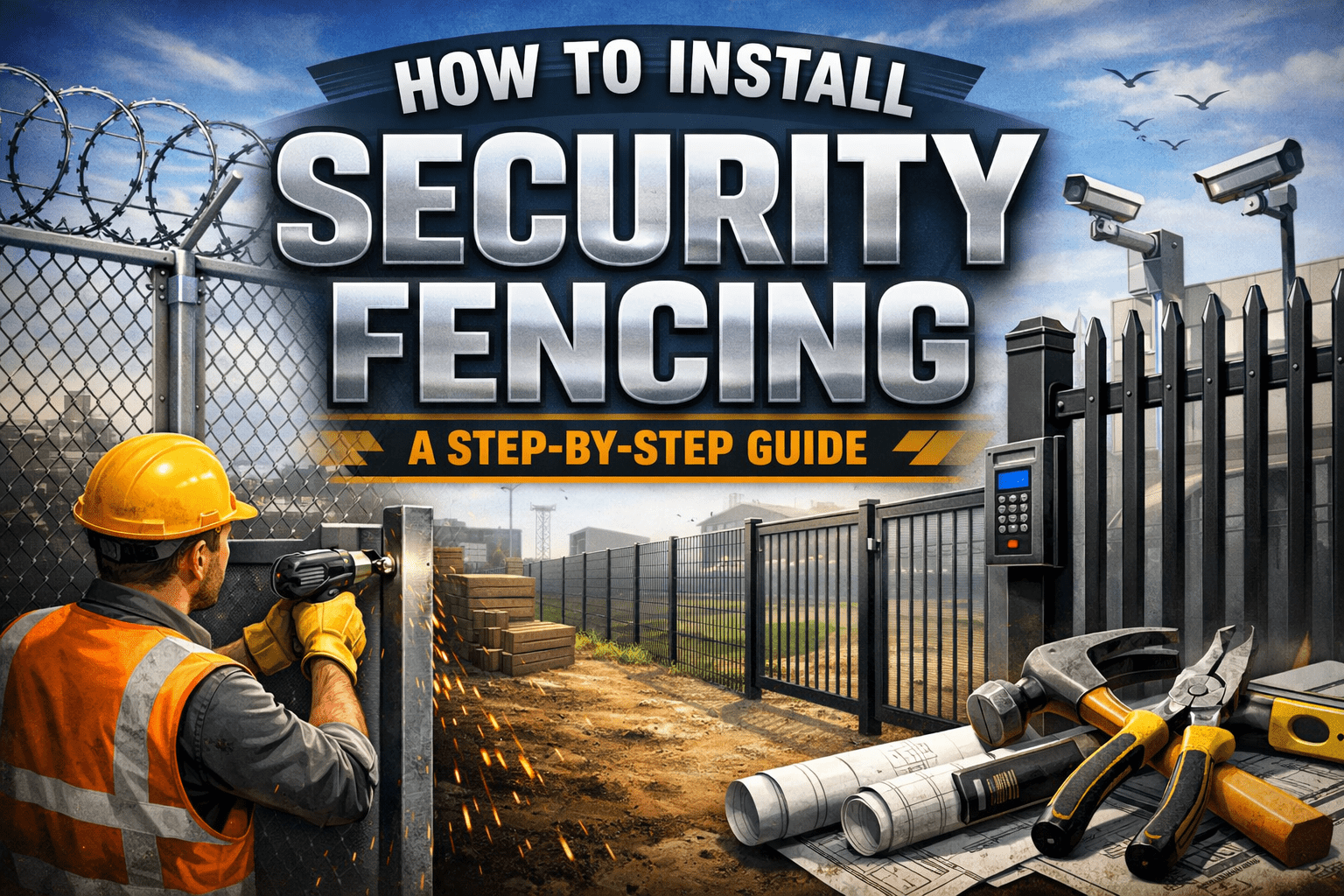
Security fencing is one of the most effective ways to protect property, control access, and improve safety. Whether you’re installing fencing for a home, business, warehouse, or construction site, following the correct process ensures durability, compliance, and maximum security.
Step 1: Assess the Site and Security Requirements
The first step in installing security fencing is understanding why the fence is needed. Different properties require different levels of security depending on location, risk level, and usage. Residential fencing focuses on privacy and deterrence, while commercial or industrial fencing prioritizes access control and durability. A site assessment also helps identify obstacles, slopes, and underground utilities.
At this stage, it’s important to measure the perimeter accurately. Clear measurements ensure you purchase the correct materials and avoid unnecessary costs. Identifying entry and exit points early will also help plan gate placement.
Step 2: Choose the Right Type of Security Fence
Selecting the correct fencing material is critical for long-term performance. Common options include chain-link fencing, steel palisade fencing, welded mesh panels, and high-security metal fencing. Each option offers different levels of strength, visibility, and maintenance requirements. The right choice depends on your budget, security needs, and aesthetic preferences.
Security fencing should also comply with local regulations and height restrictions. Choosing a fence designed specifically for security ensures better resistance to cutting, climbing, and tampering. Quality materials reduce maintenance costs over time.
Step 3: Mark the Fence Line and Post Locations
Once the fence type is selected, mark the fence line using stakes and string. This creates a clear visual guide for installation and helps maintain straight alignment. Fence posts should be evenly spaced according to the manufacturer’s recommendations. Proper spacing ensures strength and prevents sagging over time.
Accurate marking also helps avoid issues during digging. Double-check measurements before moving forward, as mistakes at this stage can affect the entire installation. Clear marking improves efficiency and reduces rework.
Step 4: Dig Post Holes and Prepare Foundations
Fence posts are the backbone of any security fence, so their foundations must be solid. Holes should be deep enough to support the height of the fence and withstand wind or impact. Typically, holes are dug one-third the height of the fence post. This provides stability and long-term durability.
After digging, place gravel at the base for drainage. This prevents water accumulation and reduces corrosion. A strong foundation ensures the fence remains upright and secure for years.
Step 5: Install and Secure Fence Posts
Place each post into its hole and ensure it is level before adding concrete. Posts must be perfectly vertical to maintain fence alignment. Pour concrete around the post and allow it to set according to the manufacturer’s guidelines. Temporary braces can be used to hold posts in position while the concrete cures.
Allow sufficient curing time before attaching fence panels or mesh. Rushing this step can weaken the structure. Properly installed posts provide the strength needed for a high-security fence.
Step 6: Attach Fence Panels or Mesh
Once the posts are fully set, install the fencing material. Panels or mesh should be securely fastened using appropriate brackets, clamps, or tension wires. Ensure all connections are tight to prevent movement or tampering. Consistent tension improves both security and appearance.
For chain-link fencing, stretch the mesh tightly to avoid sagging. For panel fencing, ensure panels are aligned evenly from start to finish. This step defines the overall look and effectiveness of the fence.
Conclusion
In examining the reasons we’ve tabled, it becomes clearer why bringing professionals to handle the installation of your security fencing is a considered move towards quality, efficiency, legal compliance, safety, and overall aesthetics. Who would have thought that engaging professional fence installers also amounts to the protection of your time, back pocket, and peace of mind?
We encourage you to consider this decision as an investment rather than an expense. It may just turn out that “doing it yourself” isn’t doing you the Favors, you imagine it should.