

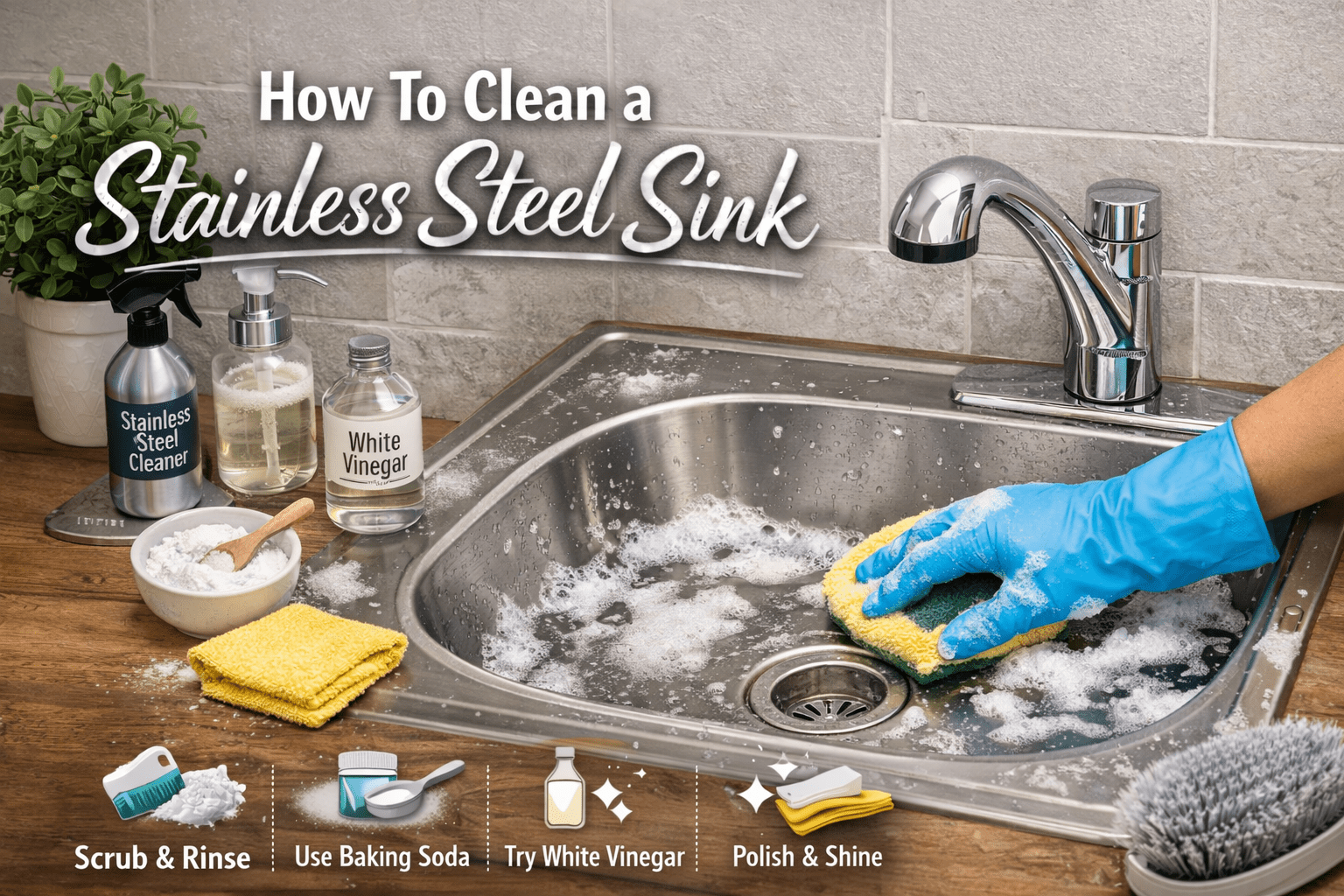
A stainless steel sink is one of the hardest-working features in any kitchen. It handles food scraps, greasy pans, soapy water, and daily washing, yet we expect it to stay spotless and shiny. Over time, mineral deposits, water marks, scratches, and grime can dull the surface.
The good news? You don’t need expensive cleaners or professional help. With the right cleaning method and consistent maintenance, your stainless steel sink can continue looking brand new for years.
This guide walks step-by-step through deep cleaning, daily care, stain removal, best cleaners, and common mistakes. Whether your sink is lightly dull or heavily stained, you’ll find the ideal solution below.
Why Stainless Steel Needs Regular Cleaning
Many homeowners believe stainless steel is “maintenance-free,” but even durable metal reacts to everyday messes. Oils, hard minerals, and acidic residues leave streaks and discoloration that worsen over time. Without maintenance, buildup becomes harder to remove and can cause surface etching.
Regular cleaning stops:
- Water spotting from minerals like calcium and magnesium
- Soap residue that leaves cloudy films
- Food particles that create foul odors
- Tiny marks that collect grime and dull shine
Stainless steel keeps its smooth satin finish only when the surface is kept clean, dry, and free from harsh contaminants. A consistent routine means less scrubbing and more sparkle.
The Best Daily Routine to Maintain Shine
You don’t have to deep-clean your sink every day. A two-minute routine after the last dishwashing session keeps grime from sticking. This prevents long-term staining and reduces how often bigger cleaning sessions are needed.
Daily steps:
- Rinse the entire sink basin with warm water
- Apply one drop of dish soap to a sponge and scrub all sides
- Rinse away suds completely
- Dry using a microfiber towel
Why drying matters:
- Prevents water spots
- Stops lime scale from forming
- Maintains original luster
If you only adopt one habit, let it be wiping your sink dry. That little action alone makes a dramatic difference in how clean stainless steel stays.
Step-by-Step Deep Cleaning Method (Weekly or Bi-Weekly)
A full clean removes stuck grime, revives metal shine, and sanitizes your sink. This method uses safe ingredients you already own and won’t damage the steel.
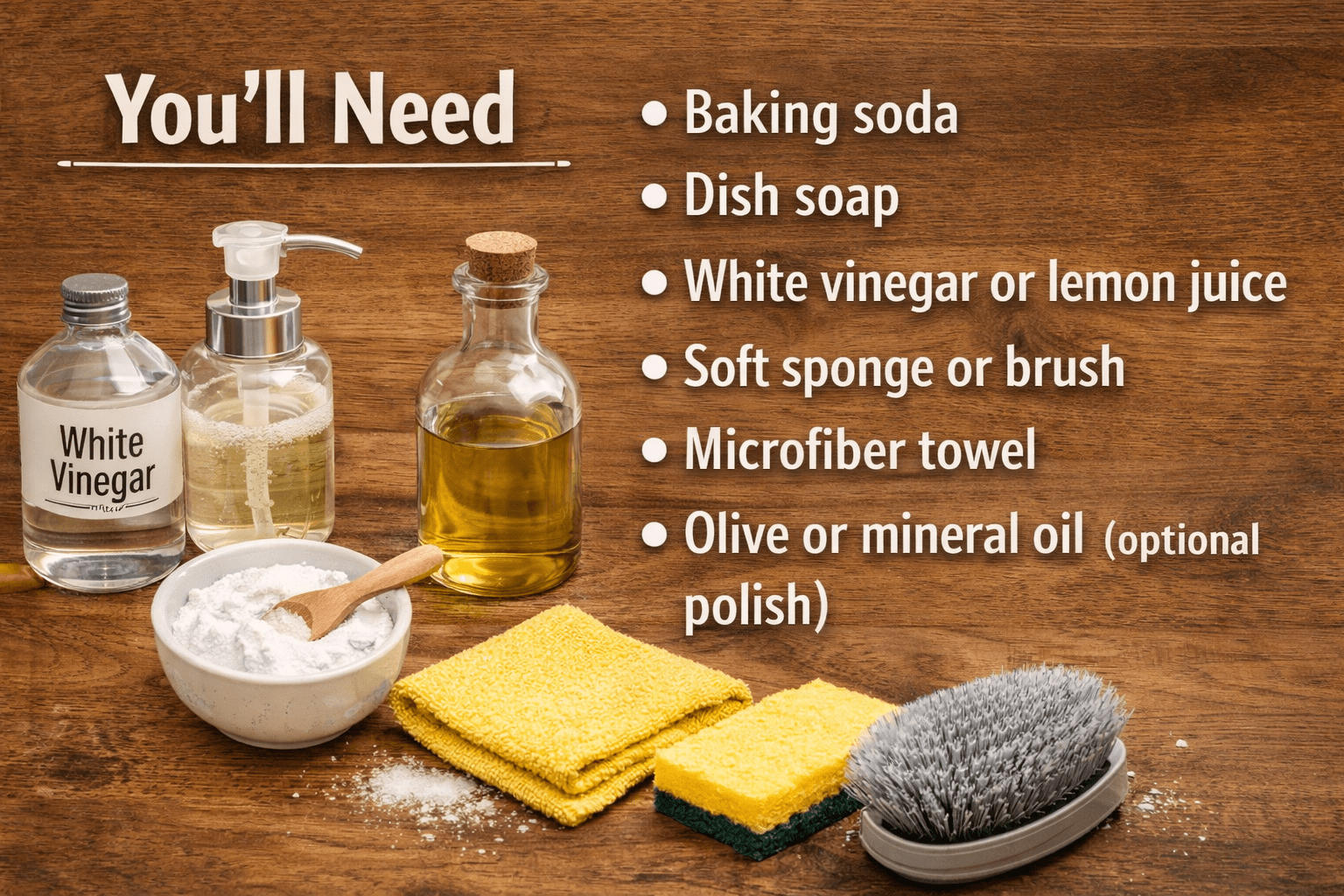
You’ll Need
- Baking soda
- Dish soap
- White vinegar or lemon juice
- Soft sponge or brush
- Microfiber towel
- Olive or mineral oil (optional polish)
Cleaning Process
- Clear & Rinse – Remove dishes and rinse off loose debris
- Sprinkle Baking Soda – Cover the interior surface evenly
- Scrub With the Grain – Work in the direction of steel lines to avoid fine scratches
- Add Vinegar for Lift – Spray lightly to dissolve stains and loosen minerals
- Rinse Thoroughly – Make sure every bit of residue is washed away
- Dry Completely – A water-free surface helps stainless steel shine
- Polish if Desired – A few drops of oil rubbed in restore a reflective finish
Advantages of this method:
- Eco-friendly
- Scratch-free
- Safe for food surfaces
Repeat weekly if your sink sees heavy use; monthly is fine for smaller households.
Removing Hard Water & Mineral Stains
Homes with hard water experience more spotting, particularly around the drain and faucet base. The chalky white marks come from evaporated minerals and require slightly stronger treatment.
Vinegar Treatment
- Soak paper towels with white vinegar
- Lay them across stained areas
- Let sit 20–30 minutes
- Remove towels and wipe gently
- Rinse and dry
Benefits:
- Breaks down calcium deposits
- Dissolves soap scum
- Neutralizes odor-causing bacteria
If stains persist, repeat weekly until deposits lighten, then maintain with everyday drying.
Eliminating Rust Spots and Orange Stains
Stainless steel itself doesn’t rust, but metal transferred from cookware can. Iron particles cling to the surface and oxidize, forming orange speckles. The key is removing them without abrasive scrubbing.
Rust Removal Paste
- Mix baking soda with a few drops of water
- Rub into stains with a cloth
- Let sit 10 minutes
- Rinse thoroughly
For severe rust:
- Use Bar Keeper’s Friend with light pressure
- Avoid scrubbing hard or against the grain
Prevent rust by:
- Not leaving cast-iron pans in the sink
- Rinsing after acidic foods such as tomatoes or pickles
- Keeping the surface dry when not in use
Getting Rid of Grease Films, Burn Marks & Food Oils
Some sinks develop dull, greasy patches even after rinsing. This comes from oil residue or heat exposure from extremely hot pots. The best approach is breaking down cooking fats before they cling permanently.
Grease Removal Method
- Combine dish soap with baking soda to form a paste
- Spread over dull sections
- Scrub along the grain using a non-scratch pad
- Rinse with hot water
- Dry thoroughly afterward
If grease continues to return, evaluate dish habits—pouring cooking oil down the drain or rinsing pans without wiping may be contributing.
Natural Cleaners vs Store-Bought Products
Both categories work, but each has ideal uses depending on the type of mess.
Natural Cleaners
Great For:
- Daily cleaning
- Light stains
- Eco-friendly households
Common options:
- Baking soda — gentle scrubbing
- Vinegar or lemon juice — descaling
- Salt + lemon — mild abrasive
- Olive oil — streak-free polish
Store-Bought Cleaners
Best For:
- Persistent stains
- Deep discoloration
- Heavy mineral buildup
Top-rated kitchen-safe choices:
- Bar Keeper’s Friend
- Weiman Stainless Steel Cleaner
- Bon Ami
Use sparingly and always rinse surfaces completely after application to avoid residue buildup.
The Right Tools for Cleaning Stainless Steel
Not all sponges and cloths are safe for stainless steel. Using the wrong tool can create micro-scratches that trap grime and dull shine.
Recommended tools:
- Microfiber cloths
- Non-scratch sponges
- Soft dish brushes
- Old toothbrushes for tight corners
Avoid:
- Steel wool
- Wire brushes
- Sandpaper
- Any scratch-heavy scrubbing pads
Gentle tools protect the smooth finish and reduce future cleaning effort.
❌ Mistakes to Avoid When Cleaning Stainless Steel
Many homeowners accidentally damage their sink by using strong products or rough scrubbing. Stainless steel is hardy, but certain materials erode surface protection.
Avoid:
- Bleach or chlorine cleaners — cause staining and corrosion
- Steel wool pads — leave scratches that invite rust
- Harsh chemicals like oven cleaner
- Leaving sponges or wet towels inside the sink — lead to discoloration
- Letting water collect around edges — causes spotting and dullness
Understanding what not to use saves you money on repairs and replacements.
Best Practices to Keep Your Sink Cleaner Longer
A few preventative habits reduce deep-clean time dramatically. The cleaner your sink stays day to day, the easier future maintenance becomes.
Helpful habits:
- Dry after every use
- Use a stainless steel sink grid to protect the surface
- Rinse after contact with acidic foods
- Avoid letting dirty dishes soak for days
- Disinfect the drain weekly to eliminate odors
Small steps today prevent big messes later.
Conclusion
A stainless-steel sink is a versatile and reliable part of your kitchen—one that deserves regular care to stay looking its best. With just a few everyday ingredients and simple habits, you can remove stains, restore gleam, and extend your sink’s lifespan. Whether you prefer all-natural cleaning or gentle commercial products, the key is consistency: rinse, clean, dry, and polish when needed.
With proper maintenance, your sink won’t just stay clean—it will shine like new every single day.
Frequently Asked Questions
How often should I deep clean my stainless steel sink?
Weekly for families or heavy cooking households; bi-weekly or monthly for light use.
Can vinegar damage stainless steel?
It’s safe in moderation. Never soak for hours or combine with bleach products.
Does stainless steel scratch easily?
The surface is durable but sensitive to abrasive pads. Always scrub along the grain.
What do I do if my sink looks cloudy?
Cloudiness usually comes from calcium deposits—vinegar lifts residue quickly.
Can stainless steel really rust?
Not internally, but transferred iron particles from pans can oxidize. Quick removal prevents spreading.